A creative advertising agency should connect business objectives to research, messaging, design, production, placement, installation, and measurable results. By separating those responsibilities from the work of a designer, printer, media owner, or specialist vendor, you can request comparable deliverables and identify gaps before approving a campaign.
Key takeaways
- Demand positioning, audience, message hierarchy, tone, and visual rules before production.
- Judge concepts against the business goal, audience action, and complete deliverables.
- Check quotes for creative fees, production costs, installation, revisions, and compliance work.
- Require editable files, usage rights, reporting details, approval stages, and exit terms.
What a Creative Advertising Agency Is Responsible For
A creative advertising agency is responsible for connecting a business goal to a consistent campaign, not merely supplying attractive artwork. Its advertising strategy should define the positioning, audience definition, message hierarchy, tone of voice, and visual identity rules before large-scale production begins.
Audience research tests who must act, what they believe, and which proof they need. Campaign planning then turns that evidence into concepts, copywriting, art direction, graphic design, media planning, approval stages, production files, installation, and campaign reporting.
| Supplier | Primary responsibility | What you receive |
|---|---|---|
| Creative advertising agency | Strategy through execution | Brief, concepts, campaign assets, production coordination, reporting |
| Graphic designer | Visual communication | Selected designs or artwork, usually without media or production management |
| Printer or fabricator | Physical output | Printed, built, or installed items |
| Media owner | Advertising inventory | Placement, not campaign strategy or creative development |
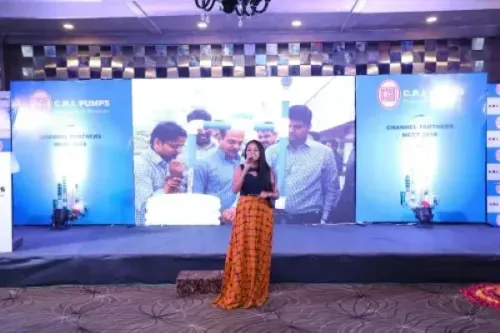
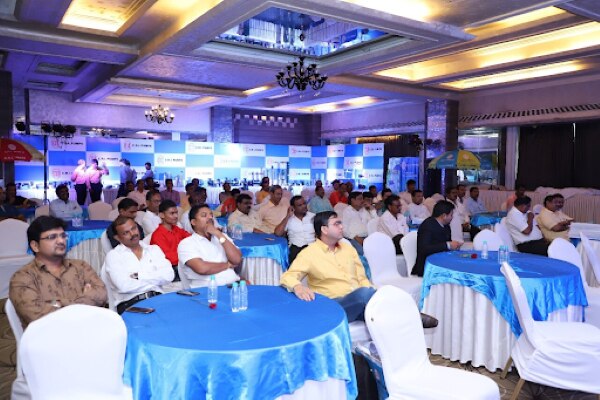
An agency also coordinates specialists and checks whether the idea works in the real environment. For an event, that means a written schedule for venue access, fabrication, loading, power, rigging, security, dismantling, and contingencies—not just a stage rendering.
Before release, it should review claims, disclaimers, comparative-advertising risk, and sector rules, including the ASCI Code. If it collects registrations or scans badges, the contract should assign data responsibilities under the Digital Personal Data Protection Act, 2023.
How an Agency Turns a Business Goal Into Campaign Artwork
Start with a measurable business objective, not a request for “something eye-catching.” State the desired action, audience, offer, geography, channels, budget, deadline, mandatory information, and evidence supporting every product claim.
1. Strategy approval: The agency documents the audience definition, approved positioning, message hierarchy, tone of voice, and visual identity rules. Approve this foundation before campaign production, or separate teams may use different logos, colours, promises, and terminology.
2. Brief approval: The creative brief converts that strategy into a single assignment, including deliverables, dimensions, placements, calls to action, and success measures. Confirm who has final approval and how many revision rounds the fee includes.
3. Concept approval: The agency presents a small set of routes with the reasoning behind each one. Judge whether the concept communicates the approved message at the intended viewing distance before discussing finishes or decoration.
4. Creative approval: Copywriting settles headlines, body copy, disclaimers, and calls to action; art direction sets the visual system; the graphic design workflow adapts it to each format. Approve one master direction, then review every size and placement for accuracy.
5. Release approval: Check spelling, phone numbers, prices, dates, legal wording, colour references, dimensions, and image licences. For claims, review substantiation and ASCI Code risks before signing off production files.
A signed artwork approval should identify the file version, approver, date, and authorised changes. Outdoor work needs separate site-owner or municipal permission and an installation check; marketing approval alone does not authorise a hoarding or sign.
How to Judge Concepts, Deliverables, and Agency Quotes
Score every concept against the same business test before discussing production cost. Campaign concept evaluation should ask whether the idea reaches the defined audience, supports the approved positioning, communicates one clear message, and works across print, signage, vehicle branding, events, and digital formats.
| Criterion | What to compare | Warning sign |
|---|---|---|
| Business fit | Audience, objective, positioning, and message hierarchy | A memorable idea with no measurable action |
| Adaptability | Layouts for different sizes, channels, and viewing distances | The concept works only in one presentation |
| Brand control | Logo use, colours, typography, claims, and tone of voice | Artwork introduces rules not in the brand guide |
| Production risk | Materials, dimensions, lead times, and installation limits | A rendering ignores power, access, rigging, or site limits |
Agency quotation comparison becomes fair only after you align the scope. Ask each agency to separate strategy, copywriting, design, artwork revisions, proofs, source files, print or fabrication, transport, installation, dismantling, taxes, venue charges, and media costs. A low headline price often excludes the work that makes the campaign usable.
Check the revision allowance and define who approves changes. Unlimited artwork revisions invite delay; a strict limit without a change-order rate creates disputes. Require written rules for colour and dimensional tolerances, reprints caused by production errors, cancellation, delays, unused fabricated materials, and installation warranty.
For print, ask whether offset or digital is proposed and why: offset spreads plate and make-ready costs across larger runs, while digital suits short, variable, or urgent reprints. Choose the quote that makes assumptions visible, not the one with the prettiest mock-up or smallest total.
What Production, Installation, and Compliance Support Should Include
After artwork approval, the agency should own the production plan, not simply email a print-ready file. It should appoint suppliers, verify dimensions and materials, control approvals, and keep one schedule across print, signage, vehicles, events, and fabricated structures.
- Request a commercial printing proof naming stock, GSM, finish, colour process, trim, bleed, folding or binding, and colour tolerance. A screen proof cannot show substrate or lamination accurately.
- Specify large-format signage by viewing distance and site conditions: substrate thickness, ink technology, laminate, mounting, wind exposure, access equipment, and service life.
- Check vehicle measurements, panel seams, door handles, mirrors, registration plates, removal method, and whether the film warranty covers washing and sun exposure.
- Run event production through a written schedule covering venue access, fabrication, loading, power, rigging, security, housekeeping, emergency contacts, dismantling, and contingencies.
- Make installation management include a site survey, permits, lifting equipment, safety controls, installation photographs, snag correction, and a named warranty contact.
- Complete trademark clearance before producing a name, logo, tagline, or distinctive packaging element. An Indian Trade Marks Registry search helps, but it is not a legal clearance opinion.
The contract must identify artwork ownership, editable-file delivery, font and stock-asset licences, approval authority, revision limits, dimensional and colour tolerances, reprint responsibility, installation warranty, delay clauses, cancellation charges, and unused fabricated materials. A business engaging SHUBH AD'S Pvt Ltd should assign one authorised approver so supplier changes do not restart the entire job.
Related products
 | Advertising Banner - Flex Printing Services Product Details: Minimum Order Quantity 1 Pack End Use Calender, Brochure, Website Type of Graphics 2D, 3D, Motion Type of Output Computer Generated,... View product → |
 | Being a client-centric organization we provide an expanded range of Vehicle Branding Service. View product → |
What Files, Reporting, and Contract Terms Should You Require
Do not accept “final artwork” as a sufficient deliverable. The agreement must name the files, measurements, reporting schedule, rights, and remedies you receive.
| Requirement | Put in the agreement | Failure prevented |
|---|---|---|
| Production files | Print-ready PDF with bleed, trim, dimensions, GSM, finish, colour process, and colour profile; also editable source files, linked images, and licensed fonts | Rework, missing assets, and colour disputes |
| Proofing | Contract proof on the specified substrate, with written approval and stated colour and dimensional tolerances | A screen preview being treated as the printed result |
| Campaign reporting | Delivery date and format for quantities, wastage, reach or impressions, event attendance method, leads, qualified leads, cost per lead, QR activity, and conversions | Photographs or unverified footfall being presented as results |
| Rights | Artwork ownership, editable-file delivery, and transfer of usage rights after payment; identify any agency-retained templates | Paying for creative you cannot reuse |
Specify who has approval authority, how many revision rounds the fee includes, and when feedback is due. Name the licence for every stock photo, typeface, music track, and third-party asset.
Add these protections:
- The agency pays for reprints caused by its production error, while approved copy or supplied files remain your responsibility.
- State the installation warranty, delay remedy, cancellation charge, and treatment of unused fabricated materials.
- If registrations or badge scans are collected, assign data access, retention, correction, deletion, and consent duties under the Digital Personal Data Protection Act, 2023.
Tie final payment to delivery of the agreed files and report, not merely installation.
Frequently asked questions
What is a creative advertising agency responsible for?
It connects a business goal to a consistent campaign by defining positioning, audience, message hierarchy, tone of voice, and visual identity rules before production.
How does an agency turn a business goal into campaign artwork?
The agency translates the goal into a campaign concept, then develops the message, design system, formats, and production-ready artwork for the intended audience and channels.
How should you compare creative advertising agency quotes?
Compare the strategic scope, concept options, deliverables, revision limits, production costs, installation charges, compliance support, timelines, and reporting included in each quote.
What production and installation support should an agency provide?
Confirm who handles material selection, print or fabrication checks, site measurements, permits, installation, safety requirements, quality inspection, and removal or maintenance.
What files and contract terms should you require?
Require final artwork, editable source files where agreed, file specifications, usage rights, reporting access, approval stages, payment milestones, revision limits, cancellation terms, and handover conditions.
Related products
 | Product Details: Minimum Order Quantity 1 Pack End Use Calender, Brochure, Website Type of Graphics 2D, 3D, Motion Type of Output Computer Generated,... View product → |
 | Advertisement Designing Services Product Details: End Use Website Type of Graphics 3D Type of Output Computer Generated Usage Advertisement Brand Techno Packaging Material Paper We... View product → |
 | Product Details: Services Required Printing Material Paper and Paperboard Brand Techno Packaging Aiming to satisfy our clients, optimally, we provide... View product → |
 | Product Details: Minimum Order Quantity 1 Piece End Use Calender, Brochure, Website Type of Graphics 2D, 3D, Motion Type of Output Computer... View product → |