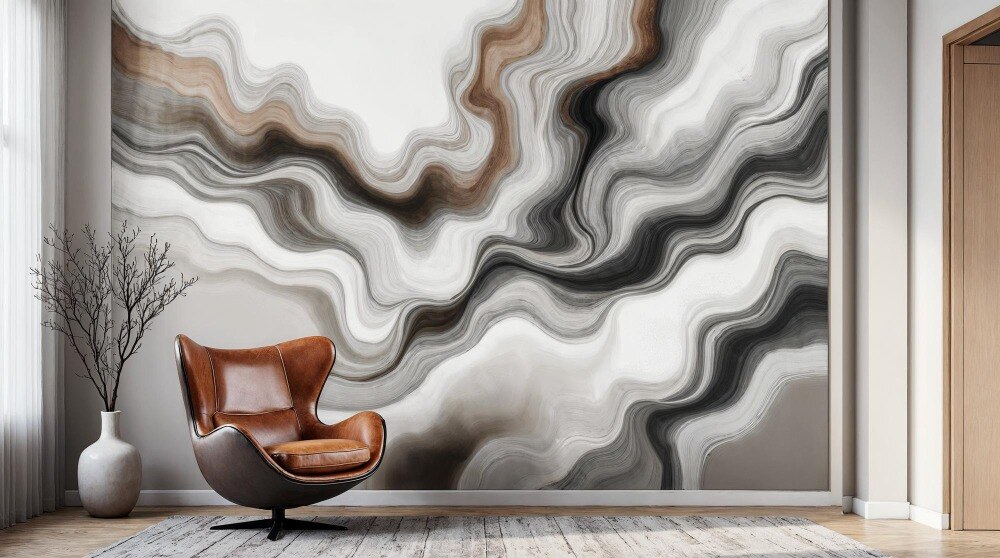
A mural succeeds when it solves a spatial problem, not when it merely fills a blank wall. By defining the purpose, matching the production method to the site, and checking the wall before installation, you can create a visual feature that supports visitors, staff, customers, and building operations instead of competing with them.
Key takeaways
- Define the wall’s job, audience, and story before commissioning artwork.
- Map sightlines around doors, counters, furniture, lighting, and safety equipment.
- Inspect and repair the wall before selecting paint, vinyl, or protective finishes.
- Include colour, panel joints, protection, safety, maintenance, and usage rights in one specification.
Start with the space’s job, audience, and story
Commercial wall murals and public space murals work best when the wall has a job beyond filling empty space. Reception area murals, retail store murals, and restaurant murals can identify a brand, shape the visitor’s first impression, or encourage people to linger.
Office murals and school murals can reinforce belonging, values, or motivation, while hospital murals can reduce institutional harshness and help visitors recognise departments.
| Space type | Primary job | Audience and story |
|---|---|---|
| Reception areas, retail stores, restaurants | Brand recognition, ambience, visitor engagement | Customers should understand the place quickly |
| Offices, schools, hospitals | Motivation, reassurance, belonging | Employees, students, patients, and families need a relevant, calm message |
| Transit areas, community centres, municipal walls | Wayfinding, cultural storytelling, or anti-graffiti coverage | A broad public needs clear information and local meaning |
Before anyone sketches, write one primary objective and one measurable response: recognise the brand, find a destination, understand local history, feel welcome, engage with an image, or protect a vulnerable wall. Do not combine every ambition into one crowded composition.
Then define the audience, the building’s surrounding architecture, local culture, and brand guidelines. Record the wall’s physical role too: doors, windows, columns, sprinklers, outlets, furniture, lighting, and sightlines can remove key areas from the artwork. This brief keeps a mural purposeful rather than decorative by default.
Design the artwork around real sightlines and building functions
A mural feels intentional when its composition follows how people move through the building, not just the shape of the blank wall. Record wall measurements, wall geometry, closest and typical viewing distance, sightlines from entrances and seated areas, and the positions of architectural features before selecting a mural concept.
Use a scaled elevation or mock-up to test the artwork against the final architectural and signage layout. Keep faces, logos and directional cues clear of door swings and service zones; a close-view reception wall needs sharper detail and cleaner seams than a large wall seen from several metres away.
Specify physical size, closest viewing distance and critical-detail areas instead of demanding 300 dpi by habit.
- Check lighting during opening hours, including glare, shadow bands and evening light; sample brand colours on site because a monitor cannot predict the effect of media, laminate, viewing angle and fixtures.
- Preserve circulation widths and access to tactile or braille accessible signage, exits, fire equipment, switches and door hardware. Do not camouflage them.
- Apply WCAG 2.2 contrast: 4.5:1 for normal text and 3:1 for large text. Protect wayfinding mural design from busy imagery that reduces legibility.
- Let local context, materials, histories and languages guide cultural storytelling, while brand guidelines control recognisable identity.
A strong layout can support employee motivation or visitor engagement, but excessive density competes with safety information and the building’s function. Tie the mural to one measurable purpose.
Prepare the wall before choosing the finish
A mural often fails at the wall, not the printer. Dust, chalking paint, grease, efflorescence, loose paint, active dampness and heavy texture cause bubbling, edge lift, colour variation and premature failure.
Complete wall preparation before selecting the finish:
- Check for leaks, condensation, rising damp and hollow-sounding plaster. Do moisture testing on concrete; ASTM F2170 measures in-situ relative humidity, while ASTM F1869 measures calcium-chloride vapour emission. Put the acceptable limit and test method in the project specification.
- Remove loose paint, degrease the surface, fill holes, complete crack repair and level ridges. Let patched areas cure, then apply a compatible wall primer and confirm that the surface is smooth, dry and firmly bonded.
- Test a small installation patch when removal matters. “Removable” adhesive vinyl can still lift weak paint or leave residue after long dwell times, heat or contamination.
Choose the format that matches the wall and the planned lifespan:
| Format | Best fit | Main limitation |
|---|---|---|
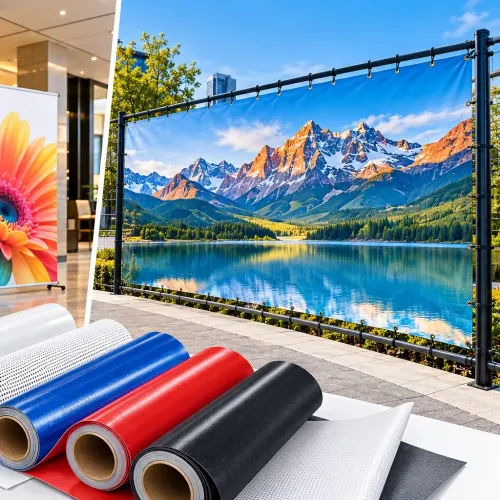
| Printed wallpaper mural | Smooth, prepared walls needing a seamless architectural finish | Removal depends heavily on primer, adhesive and wall condition |
| Adhesive vinyl | Smooth painted walls, quick installation and easier graphic replacement | Texture, dampness and weak paint cause lift or damage |
| Direct-to-wall printing | Permanent installations on sound, primed walls | Offers little protection from uneven surfaces and is difficult to remove |
| Rigid panels | Uneven walls, high impact areas or projects requiring predictable removal or reuse | Adds joints, edge details, transport weight and fixing points |
Specify colour, panels, protection, and safety as one system
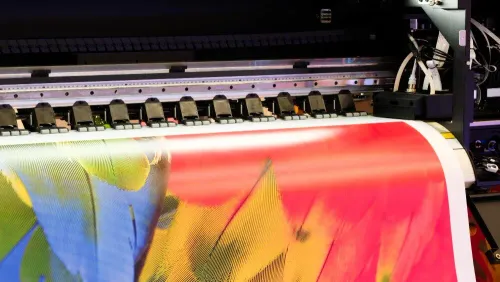
Choose the mural as a complete system: media, ink, adhesive, laminate, colour control, panel layout, and safety rating. A useful mural material comparison looks like this:
| Application | Specify | Check before approval |
|---|---|---|
| Indoor, low traffic | Wall film or fabric suited to the wall; washable mural finish; matte laminate under bright lights | Moisture resistance, cleaning method, emissions documentation, and colour under actual lighting |
| Outdoor, hot, dusty, monsoon-exposed | Outdoor-rated media, outdoor ink, exterior adhesive, and UV resistance-rated laminate | Thermal movement, rainwater at edges, dust abrasion, cleaning chemicals, and edge sealing |
| High traffic | Scuff-resistant media with protective laminate | Ask whether the laminate is a matte laminate or gloss laminate: matte reduces glare, while gloss increases reflections and saturated colour |
| Multi-panel | Confirm panel widths, overlaps or butt joints, trim allowance, and obstructions | Approve a panel map; keep faces, logos, text, and thin lines away from seams |
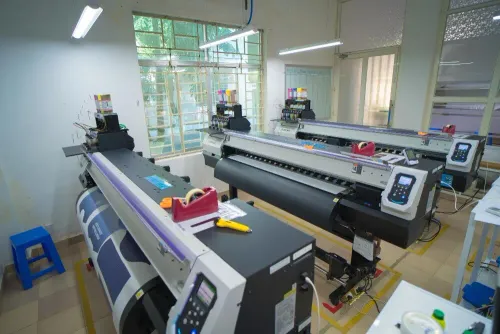
Do not approve a mural from a monitor alone. ICC colour management converts colour between devices, but media, ink, laminate, lighting, and viewing angle still change the result; require a hard proof or on-site sample for brand colours, skin tones, and large colour fields.
Treat fire classification as a property of the installed assembly, not the ink. Ask whether the substrate, adhesive, printed face, and laminate meet the building’s requirement; ASTM E84 reports flame-spread and smoke-developed indices, with Class A defined as 0–25 and 0–450 respectively.
SHUBH AD'S Pvt Ltd can help coordinate artwork, print, and installation details, but your written specification must control the outcome.
Measure transformation against maintenance, rights, and future use
A mural is the wrong choice when the wall needs frequent content changes, merchandise, safety messages, or unobstructed wayfinding. It also fails operationally when mural maintenance, cleaning access, or anti-graffiti coverage costs more than the traffic, dwell time, brand recall, or visitor engagement it creates.
Use a scaled elevation before approval. Compare the mural’s visual impact with the objective: a destination wall, a wayfinding aid, an event backdrop, or a blank-zone improvement. Reject it if dense imagery competes with safety information, signage, products, or existing artwork.
Record these checks in the specification:
- Treat PVC-free media and low-emission materials as claims to verify, not environmental conclusions. Check the adhesive, ink, laminate, backing, waste, removal, disposal route, and a recognised indoor-air certification or emissions programme.
- Obtain copyright permissions for photographs, illustrations, logos, and fonts, plus likeness rights for identifiable people. State who may reproduce, reprint, edit, install, and remove the work; commissioning the print does not transfer those rights.
- Test removable vinyl on the actual wall. Paint adhesion, porosity, contamination, temperature, and dwell time can cause residue or lifted paint; document the removal method.
- For concrete or masonry, specify ASTM F2170 in-situ relative humidity or ASTM F1869 calcium-chloride testing and the acceptable limit before adhesive installation.
For temporary event graphics, choose modular reusable fabric frames or replaceable skins over one oversized print. Confirm hardware dimensions, storage protection, transport, and colour matching for reprints. On rental premises, get the landlord’s written removal approval; heritage controls can require separate consent.
Frequently asked questions
How should you define a mural’s purpose before designing it?
Identify the space’s job, audience, and story, then decide whether the mural should support branding, guide visitors, create atmosphere, or encourage people to linger.
Why do sightlines matter when planning a commercial wall mural?
Design around where people stand and move, while accounting for doors, counters, furniture, lighting, signage, and building functions that can interrupt the artwork.
What should you check before choosing a mural finish?
Inspect the wall for moisture, cracks, dust, uneven surfaces, and previous coatings. Repair and prepare it before choosing paint, printed panels, vinyl, or a protective finish.
What details belong in a wall mural specification?
Specify colour references, panel sizes and joints, surface protection, fire and pedestrian safety requirements, cleaning methods, installation access, and replacement plans.
How should you evaluate a mural after installation?
Measure whether it supports the intended visitor experience and brand purpose, then review maintenance effort, image rights, durability, and how the space may be used later.