A successful mural depends on more than an attractive sketch: the wall, audience, viewing distance, paint system, permissions, and maintenance plan all affect the result. By the end, you will be able to define the mural’s purpose, test whether the site is suitable, compare painted and printed options, and assess proposals before work begins.
Key takeaways
- Match mural scale and detail to viewing distance.
- Put the wall’s purpose, audience, message, and colours in the brief.
- Repair damp, cracks, dust, and loose coatings before painting.
- Compare mural paint with printed panels and signage before committing.
Start with the Space’s Purpose, Audience, and Viewing Distance
A mural improves a space only when its subject, scale, and visual energy serve the people using it. Define the wall’s job before developing a mural concept: guide movement, express local identity, teach, support a brand, encourage interaction, or make a waiting area feel less institutional.
| Space | Primary purpose | Audience and distance | Suitable design direction |
|---|---|---|---|
| Public space | Placemaking or wayfinding | Mixed users; viewed from paths, vehicles, or across a plaza | Bold landmarks, readable symbols, local references, and high-contrast forms |
| Commercial property | Brand recall or customer engagement | Customers, staff, and passers-by; viewed from entrances, roads, or shop floors | Controlled brand colours, a clear focal point, and details that reward closer viewing |
| School or college | Learning, identity, or transition | Students and staff; viewed from corridors, classrooms, or assembly areas | Subject-linked imagery, age-appropriate scale, and concentrated detail rather than wall-to-wall stimulation |
Measure the nearest and farthest viewing points before setting lettering, line weight, or detail. A design that works at two metres can become an indistinct colour field from a road, while glossy areas can create glare beneath spotlights, glass façades, or afternoon sun.
Keep school mural ideas focused in corridors, collaboration zones, libraries, or subject areas. Dense displays across every classroom wall can distract pupils during instruction.
Design for contact and upkeep: keep QR codes, sponsor marks, and delicate lettering above furniture and cleaning impact zones, and retain a colour reference for future repairs. For an exterior public space in Nagpur, account for harsh sun, heat, and monsoon rain when selecting imagery and placement.
Write a Brief That Controls the Design Before Painting Begins
A mural design brief should turn an attractive idea into a controlled, testable specification before anyone mixes paint.
1. State the purpose, audience, location, wall dimensions, viewing distances, and expected behaviour. A cultural identity mural needs agreed references and community review; an educational mural needs an age-appropriate learning objective, factual owner, and readable labels.
2. Define the message hierarchy. Mark essential words, numbers, arrows, room names, safety information, and brand elements. Use standardized signage for critical directions, accessible routes, and emergencies; a decorative mural must not be the sole wayfinding system.
3. Attach a scaled elevation showing typography, symbols, margins, line weights, colour references, and lighting conditions. Check every essential text or symbol against its immediate background at 4.5:1 contrast for normal text and 3:1 for large text, using WCAG 2.2 as a practical legibility benchmark.
Avoid glossy finishes where spotlights, glazing, or afternoon sun will create glare.
4. Record approval owners, permissions, working hours, access limits, and an artwork sign-off date. Separate design approval from production acceptance, then list checks for wall preparation, primer, colour proof, line quality, edges, topcoat, cleanup, and photographs.
5. Identify substrate risks before finalising the specification: dampness, cracks, efflorescence, rising water, salt deposits, and electrical or plumbing obstructions. For an exterior Nagpur wall, include solar exposure, pre-monsoon heat, southwest-monsoon rain, and a maintenance inspection schedule.
Inspect and Prepare the Wall Before Choosing the Paint System
A wall is ready for a mural only after it is dry, sound, clean, and free of active leaks. During wall surface inspection, look for hollow plaster, loose powder, cracks, efflorescence, rising damp, algae, oil, and peeling paint.
Check water entry around roof edges, windows, pipes, and joints; repair the source, allow masonry to dry, then remove failed layers and fill cracks. Painting over damp masonry traps moisture and causes blistering or renewed salt deposits.
Use this checklist before approving the paint system:
- Test suspect areas with a moisture meter, inspect after rain, and record wall temperature and sunlight exposure.
- Identify traffic, access equipment, electrical conduits, plumbing, and surfaces vulnerable to impact or graffiti.
- Apply a compatible primer to the cleaned substrate; do not use extra paint to hide alkaline or damp masonry.
- For occupied interiors, specify the complete system, including sealer, tinting, cleaning products, ventilation, and curing time. Low VOC does not mean zero emissions.
| Coating | Best fit | Main caution |
|---|---|---|
| Interior low VOC paint | Schools, offices, hospitals | Ventilate during curing; test glare and washability |
| Exterior acrylic paint | Sound exterior masonry exposed to sun and rain | Can chalk or fade if poorly prepared |
| Elastomeric coating | Exterior walls with fine, stable movement | Can trap moisture and hide defects |
| Anti-fungal paint | Damp-prone interiors after moisture repair | Cannot replace leak correction |
For anti-graffiti protection, test a sample first. Sacrificial coatings renew easily but need reapplication, while permanent coatings tolerate harder cleaning yet can change gloss, colour, or vapour movement.
Compare Painted Murals with Printed and Signage-Based Alternatives
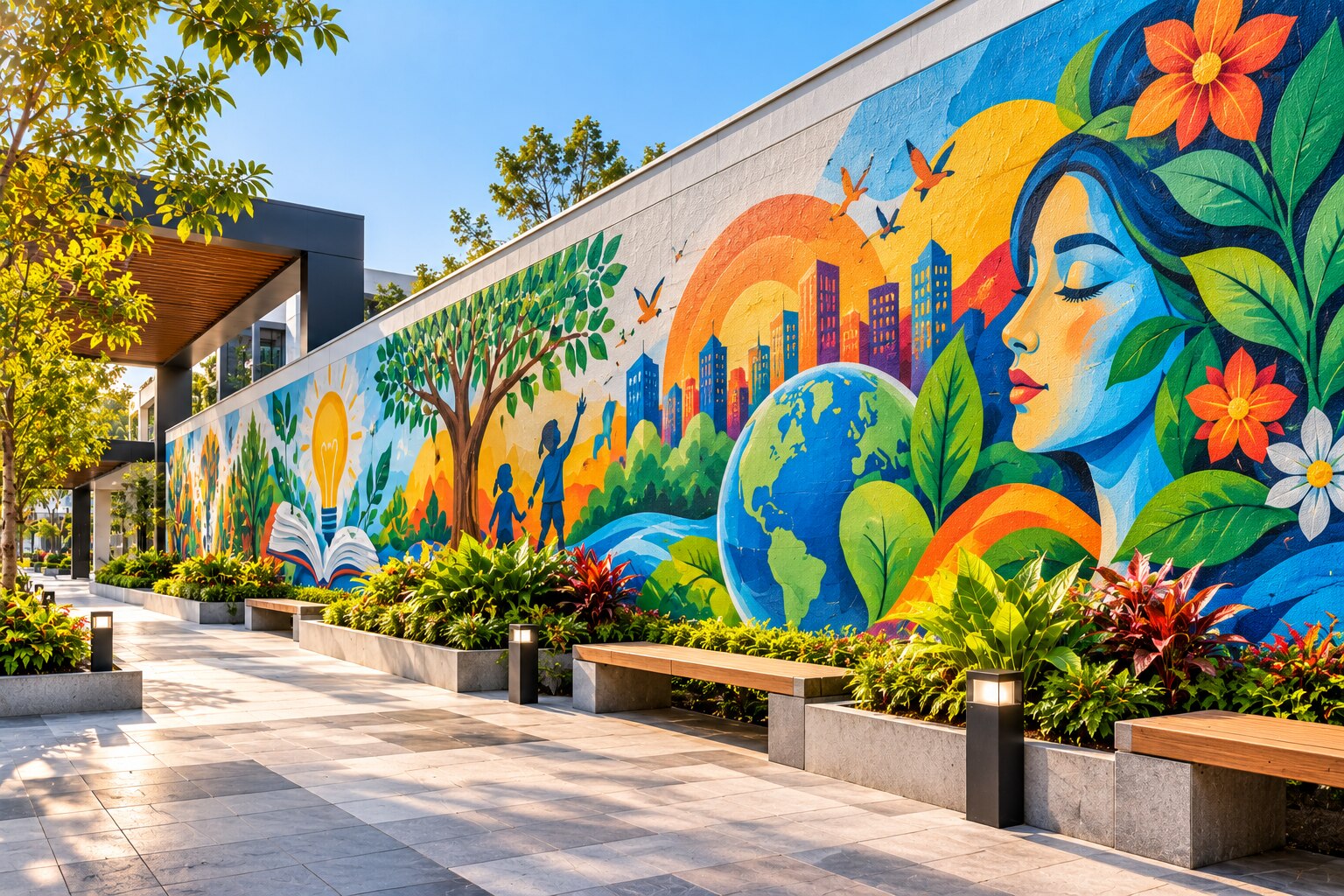
Choose a hand-painted mural when the wall needs original character, visible brushwork, community participation, or artwork that adapts around columns, cracks, and irregular openings. Use a manufactured alternative when speed, repeatability, photographic detail, replacement, or precise text matters more.
| Option | Choose it when | Main trade-off |
|---|---|---|
| Hand-painted mural | The space needs a distinctive, site-specific experience and you can allow setup, painting, drying, and touch-ups | Skilled labour takes longer, and batch or touch-up colour variation remains visible |
| Printed vinyl | You need sharp logos, photographs, removable branding, or quick installation on a smooth wall | Seams, edge impact, textured plaster, and adhesive failure can damage the finish |
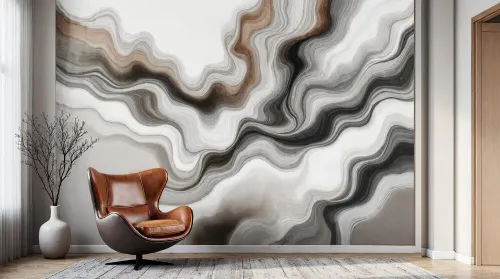
| Wallpaper | You want a continuous interior pattern or a premium room-scale image on a prepared surface | Moisture, poor adhesion, and wall movement can lift joints |
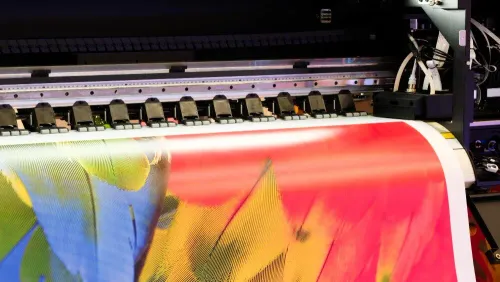
| Direct-to-wall digital printing | You need high-resolution artwork without film seams on a flat, sealed wall | It demands accurate wall preparation and specialist equipment |
| Flex panels | The message is temporary, budget-led, or intended for replacement during campaigns and events | The surface looks less integrated and needs careful edge fixing |
| Signage or exhibition graphics | Visitors need readable directions, safety messages, schedules, or modular displays | Function leads the design, so it provides less artistic depth |
For essential words, numbers, and arrows, check contrast against the immediate background; use 4.5:1 for normal text and 3:1 for large text as a WCAG 2.2 benchmark. Approve a physical painted drawdown or printed proof under site lighting, not only a screen image.
SHUBH AD'S Pvt Ltd can help compare flex panels, exhibition graphics, and painted production through one specification. Separate artwork approval from production acceptance, recording primer coverage, colour proof, edge quality, protective coating, cleanup, and photographs.
Budget, Manage, Inspect, and Maintain the Finished Mural
A reliable mural cost estimate separates design, wall preparation, paint, access equipment, protection, travel, cleanup, and mural maintenance. Price the wall by measured square metres, then add costs for cracks, damp repairs, scaffolding or lifts, night work, and a contingency for concealed defects.
Use mural project management with payment gates rather than one final handover. Release approval at these stages:
- Approved concept and colour proof
- Accepted wall preparation and primer coverage
- Inspection of painted lines, edges, colour, and registration
- Approved protective topcoat, cleanup, and photographic record
Obtain written permission from the property owner before scheduling work. Add municipal approval when the wall faces a public road, and record building, school, hospital, or landlord restrictions in the brief. Confirm working hours, pedestrian barriers, vehicle access, electrical isolation, noise limits, and who pays for security or traffic control.
Separate artwork approval from production acceptance. A client can approve the design while the wall remains unsuitable; inspect substrate preparation before painting proceeds, or defects will be blamed on the artwork later.
For an exterior mural in Nagpur, inspect damp patches, salt deposits, chalking, and failed plaster after exposure to intense heat and southwest-monsoon rain. Test an anti-graffiti coating on a representative sample: sacrificial coatings renew easily after cleaning, while permanent coatings tolerate stronger cleaning but can change gloss, colour, vapour movement, and future repainting.
Design for access during mural maintenance. Keep delicate details and low-mounted lettering away from furniture, scrubbers, and routine contact, and retain a colour reference or master file for patch repairs. Schedule inspections after the monsoon and repair peeling, efflorescence, and impact damage before water reaches the masonry.
Frequently asked questions
How do you plan a mural for a public, commercial, or educational space?
Define the wall’s purpose, audience, viewing distance, movement patterns, and desired action before developing the concept.
What should a mural design brief include?
State the wall location and dimensions, audience, message, visual style, colour limits, landmarks to preserve, approval process, deadline, and maintenance needs.
How should you prepare a wall before painting a mural?
Inspect for damp, cracks, peeling coatings, dust, efflorescence, and uneven surfaces; repair and clean the wall before selecting the paint system.
When is a printed mural or sign better than painted artwork?
Choose printed panels or signage when you need photographic detail, rapid replacement, strict brand accuracy, temporary installation, or easier relocation.