The right graphic depends on the surface, viewing distance, exposure, and how often you need to change it. By the end, you will be able to match vinyl, flex, fabric, rigid boards, or cut lettering to a specific application, prepare accurate artwork, estimate the installed work, and avoid failures such as lifted edges, slippery floors, blocked windows, and unreadable vehicle messages.
Key takeaways
- Match adhesive, finish, and durability to the surface and removal date.
- Measure width, height, curves, gaps, and obstructions before artwork approval.
- Clean and dry surfaces before installation; protect graphics from abrasion and harsh chemicals.
- Use perforated window film for visibility, and select reusable displays for changing promotions.
Match the material to the surface and the job
Choose vinyl by surface, shape, traffic, and removal date—not by colour alone. The wrong film can lift at vehicle edges, damage paint, or become slippery under wet shoes.
| Surface or job | Best material | Why it fits |
|---|---|---|
| Shop window glass | Shop window vinyl or perforated one-way vision film | Use solid printed vinyl for privacy and strong colour; use perforated film when people inside need outward visibility. |
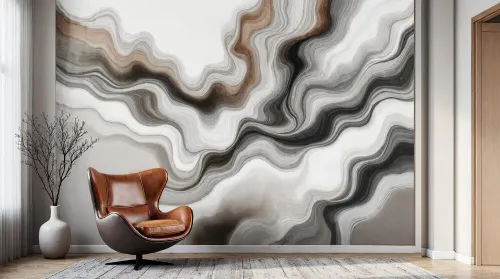
| Office wall or reception | Wall graphics on a tested adhesive vinyl | Test a small panel first. Dust, dampness, chalking paint, textured plaster, silicone, and weak gypsum-board paper can cause failure or paint damage. |
| Counter and smooth door | Self-adhesive decal vinyl | Suitable for counter branding and door graphics on clean, sound laminate, metal, or painted surfaces. Removable adhesive is not damage-proof. |
| Flat vehicle panels | Calendered vinyl | Works for short- to medium-term graphics on relatively flat vans, doors, and panels. |
| Curves, recesses, rivets | Cast vinyl | Its thinner, conformable construction reduces shrink-back and edge lifting on complex bodywork. |
| Floors | Floor-rated vinyl system | Specify floor-rated adhesive plus a tested slip-resistant laminate or coating; standard gloss laminate becomes hazardous when wet. |
| Illuminated sign box | Translucent film | Opaque white vinyl blocks the glow. Confirm film colour, printed density, LED spacing, diffuser depth, and viewing distance. |
| Events and rough surfaces | PVC flex, fabric banner, or rigid signboard | Choose flex for economical outdoor coverage, fabric for lightweight indoor displays, and rigid board for a flat, durable panel. |
For temporary promotions, confirm dwell time, wall temperature, paint age, and a documented removal test before installation. For shops, offices, and venues, request fire performance for the complete installed assembly: face film, adhesive, substrate, laminate, frame, and backing—not the vinyl alone.
Measure the installation area before designing
Measure the actual vinyl printing area, not the nominal wall, window, vehicle panel, or display size. Record width and height at several points because uneven walls, curved panels, trims, and frames can change the usable dimensions.
1. Cleanly define the installation boundary. Measure between fixed edges, then note skirting boards, corner returns, doors, handles, sockets, vents, windows, wheel arches, badges, and other obstructions. Photograph the surface with a tape measure visible.
2. For large graphics, divide the surface into practical panels and mark every panel join. Keep faces, product names, and small text away from joins; allow extra material for overlap or trimming according to the installer’s method. Do not force one file across a surface that cannot be installed in one piece.
3. Build bleed and safe margins into the artwork. Extend backgrounds beyond the cut or trim line, then keep logos, text, and important details inside the safe margin. Add the finished size, panel dimensions, scale, and a diagram showing the installation direction.
4. Draw each obstruction at its measured position rather than cutting it out by guesswork. Supply a separate cut path for contour cutting, and check that the path follows the intended edge without removing thin lettering or internal details.
5. Confirm the substrate before final production. Dust, dampness, chalking paint, silicone, textured plaster, and low-surface-energy coatings can defeat adhesion, so test a small area and document removal. For brand-critical colour, approve a physical proof on the chosen vinyl; the same RGB file can shift across media.
Prepare, install, protect, and maintain the graphic
A clean, dry, compatible surface determines whether vinyl lasts. Remove dust, grease, silicone, chalking paint, and loose coating; let damp walls dry fully. Test a small panel, then perform a documented removal test, because old paint or weak gypsum-board paper can detach with “removable” adhesive.
1. Condition the vinyl and site before installation. Keep rolls dry and acclimatized, avoid rain and condensation, and apply within the film manufacturer’s temperature range. Nagpur’s heat accelerates adhesive flow, while trapped moisture and dirty edges cause lifting and staining.
2. Choose the application method for the surface. Use dry application for most walls, vehicles, boards, and small decals, working with a squeegee from the centre outward. Use wet application only when the film and adhesive permit it, mainly on suitable glass or large smooth panels; excess solution left under the graphic delays bonding.
3. Protect the printed face with lamination matched to the location. Specify UV and weather protection outdoors, and use a floor-rated adhesive with a tested slip-resistant laminate or coating for floors. Standard gloss laminate becomes slippery when wet, especially at entrances and event venues.
4. Confirm the complete installed assembly for venues requiring fire performance: vinyl, adhesive, substrate, laminate, frame, and backing. Request the manufacturer’s test certificate or applicable fire-test classification.
5. Clean with mild detergent, soft water, and a non-abrasive cloth. Do not pressure-wash edges or use solvents; inspect seams and corners after heavy rain, heat, or impact and repair lifting before water reaches the adhesive.
Choose the right treatment for vehicles and windows
Specify vehicle branding by body shape, campaign duration, and the complete print system—not by “printable vinyl” alone. Use cast vinyl for compound curves, deep recesses, rivets, and long-term wrapping; use calendered vinyl for relatively flat van sides, doors, and short- to medium-term campaigns.
Name the face film, adhesive, ink technology, and overlaminate together, because an ink-compatible film is not automatically compatible with every laminate.
| Vehicle option | Specify it this way | Main risk if mismatched |
|---|---|---|
| Cast vinyl | Compound curves, recesses, rivets, long-term use | Edge lifting or shrink-back |
| Calendered vinyl | Flat panels, doors, temporary campaigns | Distortion or premature failure on curves |
| One-way vision film | Glass with outside messaging and inside outward visibility | Poor privacy or blocked visibility if open area is wrong |
For shop and office windows, choose the viewing result before the artwork. Perforated one-way vision film shows the printed image outside while preserving outward visibility inside; state the required open-area percentage and seal the edges to keep dirt from entering. Solid opaque film gives stronger privacy and denser colour, but it blocks the view.
Use cut lettering or solid graphics when people need to read a message clearly from both sides of the glass. For interior offices, shops, or event venues, ask for fire performance documentation for the installed assembly, including the vinyl, adhesive, laminate, substrate, frame, and backing—not just the face film.
Compare promotional displays by use, cost, and reuse
A reinforced flex banner gives the best overall balance for repeated outdoor promotions: it is visible, inexpensive to replace, easy to roll and store, and quick to mount. Choose fabric banners when portability and appearance matter more than maximum rain resistance.
| Format | Best use | Visibility and weather | Portability, installation, and total cost |
|---|---|---|---|
| Flex banners | Shop openings, roadside offers, event backdrops | Strong colour visibility; reinforced hems and spaced eyelets improve outdoor life, but the banner needs a frame designed for wind | Low initial cost; rolls compactly; fast to install; reusable if stored dry and tensioned correctly |
| Fabric banners | Indoor conferences, reception areas, stage branding | Premium appearance and low glare; suitable for short outdoor use only when the fabric and print system are weather-rated | Light, foldable, and easy to carry; higher purchase cost than basic flex; highly reusable |
| Flag banners | Outdoor entrances, queues, moving footfall | Tall, moving graphics attract attention; wind, rain, and anchoring determine service life | Very portable; setup is quick with a pole and base; costs more than a single flex banner but reuses well |
| Rigid signboards | Direction signs, counters, durable shop displays | Sharp, smooth face; resists handling, but board edges and wind loads need protection | Bulky to transport; requires brackets, stands, or a frame; higher upfront cost, with good reuse |
Do not hang a banner by its printed sheet alone. Ask SHUBH AD'S Pvt Ltd to specify hem reinforcement, eyelet spacing, base or frame capacity, and storage instructions together; those details decide whether a low-cost display remains usable after several events. For a temporary indoor campaign, fabric usually wins. For outdoor value, select reinforced flex.
Related products
 | Product Details: Minimum Order Quantity 10 Square Feet Printing Type Text Printing, Photo Printing, Pattern Printing Services Required Designing,... View product → |
 | Product Details: Minimum Order Quantity 1 Square Feet Service Offer Designing, Printing Brand Techno Packaging Frequency of Requirement Annually We... View product → |
Frequently asked questions
How do you choose vinyl for a specific surface?
Match the film and adhesive to the surface material, shape, traffic level, exposure, and planned removal date.
What should you measure before designing vinyl graphics?
Measure the full width and height, then record curves, seams, gaps, handles, windows, and other obstructions.
How should vinyl graphics be prepared, installed, and maintained?
Clean and dry the surface, apply the graphic without trapping air, protect exposed edges, and wash it with mild soap rather than abrasive chemicals.
What vinyl treatment works for vehicles and windows?
Use conformable vehicle film for curved panels and perforated window film where outward visibility must remain available.
How do promotional displays differ by use and reuse?
Choose fixed graphics for long-term locations, pull-up banners for portable indoor use, and modular or fabric systems when messages change regularly.
Related products
 | One Way Vision Printing Services Product Details: Color Black, White Thickness 2.6 mm Brand Techno Packaging We are instrumental in providing our clients with a perfect quality One... View product → |
 | Advertising Banner - Flag Banners We offer a wide range of Flag Banners. These advertising flag banners are ideal for outdoor promotional demonstrations. View product → |
 | Advertising Banner - Flex Printing Services Product Details: Minimum Order Quantity 1 Pack End Use Calender, Brochure, Website Type of Graphics 2D, 3D, Motion Type of Output Computer Generated,... View product → |
 | Being a client-centric organization we provide an expanded range of Vehicle Branding Service. View product → |