A flex print can guide visitors, turn a shopfront into a sale message, cover a construction fence, or carry a brand across a roadside display—but the right material and finishing depend on where people will see it and how long it must last. By the end, you will be able to match each use to a flex type, prepare artwork for its viewing distance, and specify the fabrication details that prevent failure during installation or reuse.
Key takeaways
- Place directional flex at entrances, turns, registration points, and other decision points.
- Use short offers, large type, and clear deadlines for temporary retail promotions.
- Choose weather-resistant material, finishing, and mounting for outdoor placements.
- Specify eyelets, hems, installation, removal, and storage before approving the order.
How flex prints organise and brand an event venue
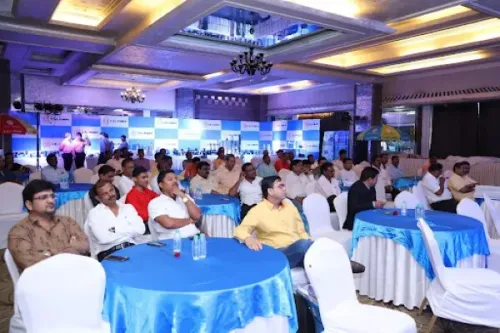
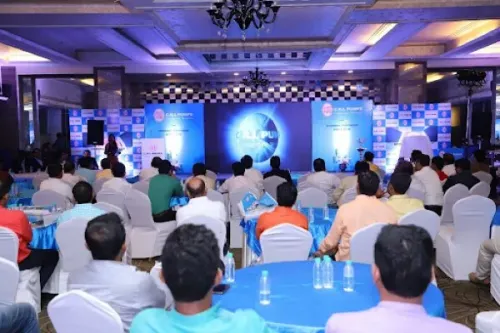
Guests need to understand three things quickly: where to enter, where to go, and why the event matters. Place flex graphics at decision points, then reserve larger surfaces for the event identity, speakers, sponsors, or campaign theme.
| Location | Flex graphic | What it should communicate |
|---|---|---|
| Entrance | Event entrance signs | Event name, date, entry point, and registration direction |
| Stage | Stage backdrops | Event identity, theme, or speaker setting without competing with faces |
| Sponsor area | Sponsor walls | Sponsor logos in an agreed order and size, with clear brand separation |
| Circulation routes | Directional signs | Arrows, room names, toilets, exits, food areas, and accessibility routes |
| Registration desk | Counter panels | Registration instructions, QR code, welcome message, or queue information |
| Exhibition booths | Booth graphics | Exhibitor name, offer, product category, and one clear call to action |
| Photo area | Photo backdrops | Event hashtag, host branding, and a visually clean repeatable logo pattern |
Keep type large enough for the distance at which guests will read it. A sign viewed across a hall needs fewer words than a counter panel. Before production, specify finished size, visible size, pole pockets, hems, hook-and-loop strips, or stand-pocket allowances separately; incorrect finishing can make accurate artwork unusable.
For repeated events, add reinforced hems, protected corners, orientation labels, and storage on a large core rather than folding the flex.
How retailers use flex for temporary promotions
Place flex graphics where shoppers decide to enter, browse, compare, and pay. A graphic at the wrong height or beyond the normal walking path becomes background noise, even with a strong offer.
- Put storefront offers above the entrance or across the window line, where passing traffic can read the message before entering. Use one offer, one deadline, and a phone-sized brand mark; crowded copy disappears against reflections and window displays.
- Install sale boards at the entrance and at the first major aisle junction. Repeat the same colour and wording on both signs so shoppers recognise the promotion instead of treating each board as a separate message.
- Position product-launch displays beside the new item, not only at the storefront. A header above the shelf explains what is new, while a side panel can show the key benefit without blocking packaging or staff access.
- Mount aisle signs above eye level at decision points, using short category names and arrows. Place them before the turn, not directly over the destination, so shoppers have time to change direction.
- Add counter panels near checkout for limited-time bundles, loyalty incentives, or a final reminder. Keep the lower edge clear of products, payment equipment, and queue barriers.
Measure the viewing distance before approving artwork. A banner seen from the car park needs larger type and higher contrast than a counter graphic read within one metre. Reuse demands reinforced hems, labelled orientation, and rolling on a large core; tight folding leaves permanent creases.
How outdoor placements change the flex specification
A building fascia usually needs opaque frontlit PVC flex for a cost-effective, solid-colour face; choose translucent backlit flex only when the fascia includes an illuminated lightbox. Vehicle displays usually need cast or polymeric vinyl, because it conforms to curves and removes cleanly without the stiffness and flutter of flex.
| Option | Best placement | Specification and limitation |
|---|---|---|
| Frontlit PVC flex | Building fascias, roadside hoardings | Use for opaque graphics; longer-term outdoor faces are often 280–440 GSM. Confirm coating, tear resistance, weldability and the exact ink-media outdoor-life estimate. |
| Mesh flex | Windy hoardings, compound-wall advertising, large wraps | Perforations reduce wind pressure, but colours look less solid and fine text loses clarity. Use larger type and stronger contrast. |
| Backlit flex | Illuminated fascias and night-facing signs | Diffuses light through the print; it is unsuitable when you need a fully opaque daytime face. |
| Vehicle-wrap vinyl | Cars, vans and buses | Conforms to panels and doors; specify removable adhesive and installer-safe surface preparation. |
| Coated fabric or reinforced banner | Construction-site covers and temporary fencing | Lighter handling can help, but demand reinforced hems, eyelets and a stated tear rating. |
For roadside hoardings and building fascias, the frame, anchorage, banner area, height and local wind exposure determine safety; heavier GSM alone does not. Treat the flex as a skin, not a structural element, and check the design against IS 875 Part 3 where applicable.
Before installation, obtain property-owner consent, municipal advertising approval and any required traffic-sightline, electrical or flame-retardancy documentation. A “fireproof” label without the material and test method proves little.
How lighting, distance, and artwork preparation affect what people see
Proof flex artwork at the distance people will actually see it, not only at 200% zoom on your monitor. A high-resolution file cannot rescue tiny type, weak contrast, or excessive copy.
1. For close-range graphics such as counter panels and photo walls, use larger effective image resolution, readable body text, and fine detail only where viewers can stand within a few metres. Inspect a full-size section at that distance before approval.
2. For traffic-distance signs, reduce the message to a short headline, enlarge letterforms, and use strong light-dark contrast. Test the design from the road or a matching viewing distance; detail that looks impressive on screen will disappear from a moving vehicle.
3. Prepare CMYK artwork with the printer’s bleed, colour profile, and safe margins, then request a scaled proof and a full-size crop containing small text, skin tones, and brand colours. Check the crop for banding, jagged edges, and colour shifts.
4. Check frontlit flex in the light that will fall on its face. For backlit flex, approve a sample inside the intended lightbox or sign cabinet, with the actual LEDs, because transmitted colour can look washed out, too dark, or uneven.
Keep text and critical logos away from seams and hems. If using mesh flex on a windy fence or building wrap, increase type size and contrast: its perforations reduce wind pressure but also reduce colour density, sharpness, and nighttime blocking.
How to specify finishing, installation, and reuse before ordering
Put the finished object, not just the artwork, on the purchase order. A correct file can still arrive without a hem, pole pocket, stand-pocket allowance, or enough clearance around its frame.
1. Specify the material and size: flex weight, GSM, opacity, tear resistance, coating, finished dimensions, and visible dimensions. Event graphics often use 200–300 GSM; longer outdoor faces often use 280–440 GSM, but GSM alone does not predict durability.
2. Name every edge treatment: hemming and welding, reinforced corners, pole pockets, hook-and-loop strips, Velcro-compatible backing, or stand-pocket allowances. Add eyelet spacing, eyelet diameter, top-edge orientation, and the distance between eyelets and the artwork.
3. Record the installation method and site limits. State the wall or frame type, anchor hardware, wind exposure, installer responsibility, removal date, and required clearance from doors, sprinklers, roads, and traffic sightlines. For public or roadside sites, obtain property-owner consent, municipal advertising permission, and electrical approval for illuminated units.
4. Require a material-specific flame-retardancy certificate and test method where the venue asks for one; “fireproof” alone proves nothing. Approve backlit flex under the actual LED light source after checking hot spots and diffusion.
5. For reuse, label the top, venue, and installation date; roll the sheet onto a large core instead of folding it. Ask SHUBH AD'S Pvt Ltd for a finished-sample check before production, then agree whether the banner returns for reuse or goes to a local PVC collection route.
Related products
 | Product Details: Minimum Order Quantity 1 Square Feet Service Offer Designing, Printing Brand Techno Packaging Frequency of Requirement Annually We... View product → |
 | Product Details: Brand Techno Packaging Printing Digital Keeping in mind, ever-evolving requirements of our valuable clients, we are offering an... View product → |
Frequently asked questions
Where should flex graphics be placed at an event venue?
Place directional graphics at entrances, registration desks, corridors, stairways, turns, and other decision points. Use larger surfaces for the event name, speakers, sponsors, or campaign theme.
How can retailers use flex for temporary promotions?
Use flex for time-limited offers, launch messages, window promotions, parking-lot signs, and in-store directional graphics. Keep the offer, price, deadline, and call to action easy to read from the viewing distance.
What changes when flex is used outdoors?
Specify material and finishing for sunlight, wind, rain, and mounting conditions. Confirm the display period, fixing method, eyelets, hems, frame, and access required for installation.
How do lighting, distance, and artwork affect flex printing?
Viewing distance determines type size and layout, while lighting affects contrast and colour choice. Prepare artwork at the printer's required dimensions, include safe margins, and check that small text and thin lines remain readable.
Related products
 | Advertising Banner - Flex Printing Services Product Details: Minimum Order Quantity 1 Pack End Use Calender, Brochure, Website Type of Graphics 2D, 3D, Motion Type of Output Computer Generated,... View product → |
 | Advertising Banner - Flag Banners We offer a wide range of Flag Banners. These advertising flag banners are ideal for outdoor promotional demonstrations. View product → |
 | Advertising Banner - Promotional Banner Manufacturer Product details: Color digital printing on both side Fabric Polyester Size 4 feet to 8 feet Minimum Order Quantity 2 Piece Product description: We... View product → |