Offline visibility is not the same as putting a logo in a busy place: a sign can receive traffic without being readable, remembered, or connected to an enquiry. By the end, you will know which physical formats fit your audience and site, what a reliable production brief must contain, and how to measure whether the work produced useful attention.
Key takeaways
- Measure notice, recognition, and recall—not traffic or print volume alone.
- Match signage, vehicles, posters, or events to viewing distance and location.
- Prioritise contrast, large type, short copy, and required business information.
- Track enquiries, branded searches, QR scans, and location-specific campaign results.
What Offline Brand Visibility Actually Measures
Offline brand visibility measures how easily people notice, recognise, and remember a brand in physical spaces—not how many vehicles pass or flyers are printed. It supports brand awareness, but visibility is only an opportunity to be seen; it does not prove a visit, enquiry, or sale.
Footfall versus impressions matters: footfall counts people or vehicles near a site, while impressions estimate opportunities to see the message. Trees, barriers, glare, speed, competing signs, and poor viewing angles reduce effective visibility.
| Channel | Best visibility job | Main constraint |
|---|---|---|
| Vehicle graphics | Repeated exposure across routes for local recognition | Viewing time is brief, so use a logo, one message, and strong contrast |
| Banners and hoardings | Broad awareness beside roads, buildings, or events | Short copy and large type beat brochure detail; permissions and sightlines matter |
| Shopfront signs | Identify a destination at the decision point | Fascia size, lighting, local rules, and approach distance determine readability |
| Handbills and brochures | Deliver offers, addresses, contact details, and instructions | Distribution quality determines whether relevant people receive them |
| Event displays and in-store branding | Reinforce the brand during interaction or purchase | Placement, crowd flow, power, anchoring, and dismantling affect delivery |
Offline advertising therefore needs channel-specific design and measurement. A roadside unit is judged by recognition at speed; a brochure by retained information; a store sign by navigational action. Track these separately instead of treating every exposure as equal.
How to Choose the Right Format for the Location
Match the format to the seconds available for attention, not simply the number of people nearby. A site survey should record approach direction, viewing distance, traffic speed, sightline obstructions, mounting height, dwell time, lighting, and permissions.
| Format | Best viewing environment | Design decision |
|---|---|---|
| Vehicle graphics | Moving audiences on repeated routes | Use a short message, large logo, and high contrast; keep plates, lamps, mirrors, safety markings, and driver visibility clear. |
| Outdoor banners | Fences, building fronts, and temporary sites | Choose weather-resistant material and copy readable from the expected approach distance. |
| Shopfront signs | Pedestrians and slow-moving traffic near the entrance | Prioritise the business name, category, opening hours, and a visible entrance cue. |
| Hoardings | Fast roadside traffic with brief exposure | Use one dominant message; detailed brochure-style layouts disappear at speed. |
| Hand-to-hand or desk viewing | Use handbills for immediate response and brochures when people need specifications or multiple offers. | |
| Event displays | Visitors who pause and move through a venue | Combine a strong backdrop message with directional signs and information panels. |
| In-store displays | Shoppers already inside the premises | Place product, price, offer, and call-to-action messages beside the decision point. |
Raw vehicle or footfall counts are not advertising impressions: trees, glare, barriers, competing signs, and poor angles reduce effective visibility.
Specify final-size dimensions, viewing distance, and RIP requirements instead of demanding “300 dpi” for every output. Test QR codes from the intended distance and phone camera after reduction, lamination, and lighting checks. For vehicle graphics, inspect seams around doors, handles, curves, and abrasive edges before installation.
How to Make an Offline Advertisement Readable and Compliant
An offline advertisement works only when a person can understand it quickly, trust its claim and take the next step. Advertising design must reflect viewing distance, traffic speed and lighting rather than treating a hoarding, leaflet and shop sign as the same surface.
1. Put the essentials in a clear order: logo, one offer or message, benefit, phone number or address, call to action, and QR code. Add price conditions, validity dates, eligibility rules, disclaimers and contact details where the claim requires them.
2. Set type size for the final viewing distance, not the laptop screen. Use strong colour contrast between text and background, leave space around the message, and avoid placing critical copy over photographs, seams or textured areas.
3. Check every claim, comparison, discount and testimonial. Keep evidence for “best”, “ No. 1”, health, performance and savings statements, and clear rights for celebrity, stock or third-party imagery. The ASCI Code is an Indian advertising reference; it does not replace municipal, traffic, landlord, event-venue or sector-specific permissions.
4. Proof Marathi, Hindi and English in the final typeface and final size. Translation changes line length, numerals and glyph rendering, so an offer date or phone number can lose visual priority.
5. Complete QR code testing from the intended distance, phone camera, lighting and finished surface. Use a short, stable URL with campaign tracking, then retest after reduction, lamination or mounting.
Finishing changes readability: gloss lamination creates glare, while matte film reduces reflection but can soften colour intensity. For vehicle graphics, keep registration plates, lamps, mirrors, safety markings and driver visibility clear, and approve the mapped artwork on the actual curved panels.
How an Advertising Company Turns Artwork into a Reliable Installation
Approve artwork in three separate stages: content, colour and material, then installation. Changing phone numbers after a die, CNC file, screen, plate, LED layout or fabricated frame is ready can force an expensive remake instead of a simple file edit.
- Content approval: check the logo, offer, contact details, legal text and QR destination.
- Colour and material approval: confirm the proof, substrate, finish, adhesive, ink and weather rating.
- Installation approval: confirm dimensions, fixing points, access, placement and final viewing angle.
Vehicle branding needs more than a correct design file. Measure each panel, account for door gaps, handles, curves, windows and removable parts, then approve a site photograph or template before production. A partial vehicle wrap suits selected panels and a shorter message; a full vehicle wrap demands stronger surface preparation and careful alignment across seams.
For banners and other large-format printing, confirm finished size, eyelets, hems, wind exposure and readable viewing distance. Signage fabrication must specify frame strength, corrosion-resistant fixings, drainage, cable protection and safe access for cleaning or lamp replacement, especially in Nagpur’s heat, dust and seasonal rain.
SHUBH AD'S Pvt Ltd can be assessed by whether its production process records these approvals rather than treating installation as the final delivery step.
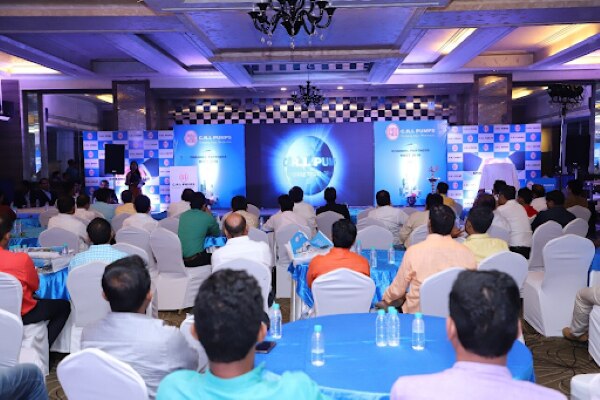
For event displays, coordinate venue load-in, storage, power, rigging or anchoring, fire exits, crowd flow, weather protection, labour and dismantling. Test every QR code from the intended distance and phone camera after reduction, lamination and installation, using a short tracked URL. Verify site-owner, municipal and electrical permissions before fabrication.
Related products
 | Being a client-centric organization we provide an expanded range of Vehicle Branding Service. View product → |
 | Advertising Banner - Flex Printing Services Product Details: Minimum Order Quantity 1 Pack End Use Calender, Brochure, Website Type of Graphics 2D, 3D, Motion Type of Output Computer Generated,... View product → |
How to Measure and Improve Offline Campaign Performance
A banner has earned its space only when it produces measurable action. Separate estimated visibility from useful attention, then connect enquiries and sales to the specific physical placement.
1. Record the baseline before installation: weekly enquiries, calls, store visits, offer redemptions and sales from the target area. Compare the same figures during the campaign and for two weeks after it ends.
2. Create attribution points. Use a unique phone number, a campaign QR code with a stable URL and tracking parameters, and a discount code printed only on that advertisement. Train staff to ask, “Where did you hear about us?” and log the answer through enquiry source tracking.
3. Test the QR code at the intended viewing distance using the phones, lighting and print finish customers will encounter. Reduction, lamination, glare and low contrast can make a code fail even when it works on a design screen.
4. Count actions, not just exposure: qualified calls, completed forms, store visits, code redemptions, quotations and closed sales. Raw vehicle or footfall figures are opportunity to see, not confirmed impressions; trees, barriers, glare and viewing angles reduce effective visibility.
5. Calculate cost per qualified enquiry and cost per sale by placement. Remove a location that attracts scans but no relevant enquiries, and repeat a placement that produces profitable customers.
6. Review the creative after the first week. Test a shorter offer, larger phone number or stronger contrast, and proof Marathi, Hindi and English at final size so translation changes do not bury the call to action.
Frequently asked questions
What does offline brand visibility measure?
It measures how easily people notice, recognise, and remember a brand in physical spaces. Traffic counts and print volume alone do not prove visibility or sales.
How do you choose an offline advertising format?
Choose based on viewing distance, audience movement, available space, exposure time, surface condition, and whether people are walking, driving, or waiting.
What makes an offline advertisement readable?
Use strong contrast, large type, short copy, clear hierarchy, simple imagery, and enough spacing. Check legibility from the actual viewing distance.
How can businesses measure offline advertising performance?
Use unique QR codes, phone numbers, landing pages, offer codes, enquiry questions, branded-search trends, and location-specific comparisons.
Related products
 | Product Details: Minimum Order Quantity 1 Piece Brand Techno Packaging Design Standard Type of Logo 3D We are having a bunch of designers to design... View product → |
 | Product Details: Mode of Advertisement Online Type of Services Design Usage Advertisement Material Paper Brand Techno Packaging We are dealing in... View product → |
 | Advertisement Designing Services Product Details: End Use Website Type of Graphics 3D Type of Output Computer Generated Usage Advertisement Brand Techno Packaging Material Paper We... View product → |
 | Product Details: Minimum Order Quantity 1 Piece End Use Calender, Brochure, Website Type of Graphics 2D, 3D, Motion Type of Output Computer... View product → |